·info@ducis.cl·Av. Apoquindo 4700, Of. 1102, Las Condes, Santiago, Chile
Freight forwarders·Mon to Fri, 9:00 – 18:00

Expertise · Medical equipment and supplies

Medical equipment and supplies

In healthcare, a delay is rarely just a logistics cost. It is a tender with a penalty, a supply that arrives with less shelf life than required, or a piece of equipment that is down while patients wait.

That is why in this sector the date rules over the price, and we plan backward from the customer’s commitment.

Three different cargoes under the same sector

They are not the same, even though they are quoted under the same name.

Equipment

Diagnostic and intervention equipment: imaging, operating room, laboratory. High value, sensitive to handling, and with a particularity that defines the whole operation: it is not enough to deliver it. Arrival has to be coordinated with installation, which usually depends on a manufacturer’s technician and on the facility having the room ready. Equipment that arrives before the works are ready generates storage costs and risk. Equipment that arrives after delays the whole start-up.
Supplies and devices

Consumables for clinical use: dressings, disposable devices, protective items. Recurring volume, tight margins and scheduled purchases. Here what rules is the committed delivery date and the shelf life the product arrives with.

Reagents and cold-chain products

Laboratory reagents, biological supplies, products with a defined temperature range. The most fragile cargo in the sector: a temperature excursion can ruin the entire lot without anything showing on the outside.

What we have moved

Real operations, with their dimensions.

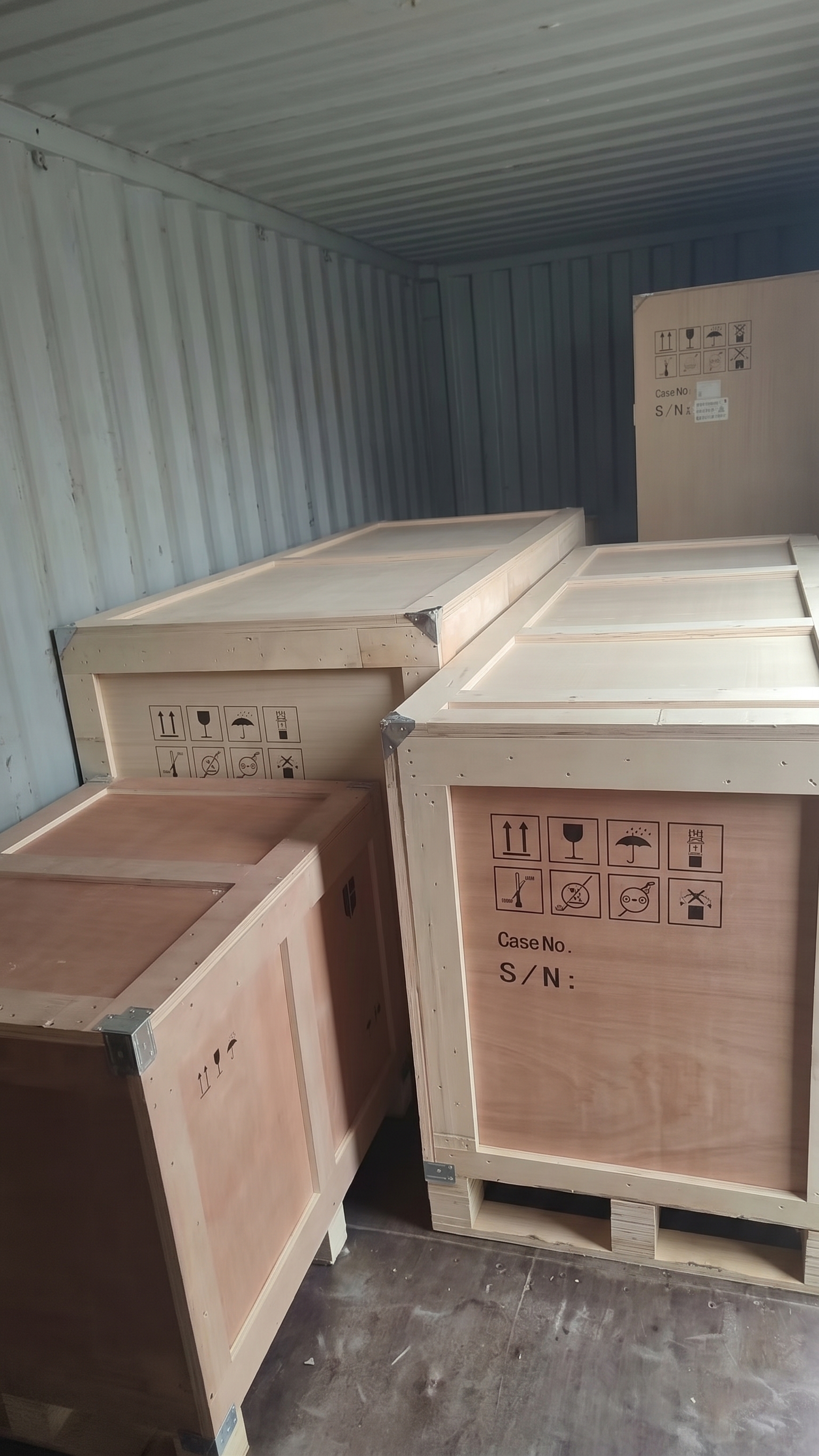
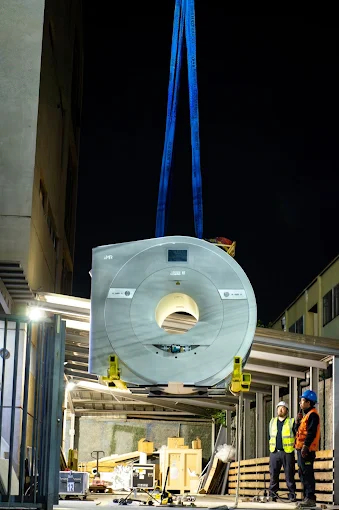
Wooden crates with the X-ray system, stowed and braced inside the containerImaging equipment lifted into place at destination for installation
Air · Blocking, bracing and lashing

Digital X-ray system for imaging

What it was

Cargo
Digital Medical X-Ray Imaging System
Gross weight
2,381 kg
Volume
20.86 CBM
Origin
Xiamen (XMN), China
Destination
Santiago (SCL), Chile
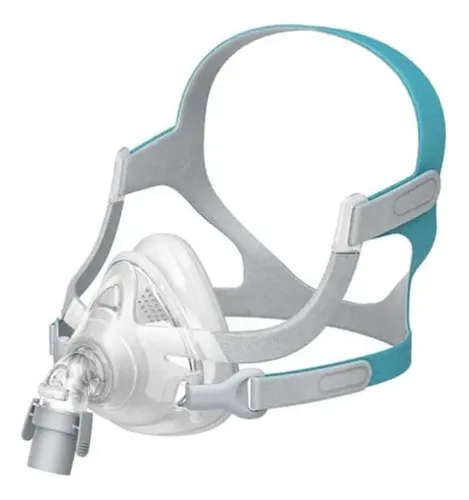
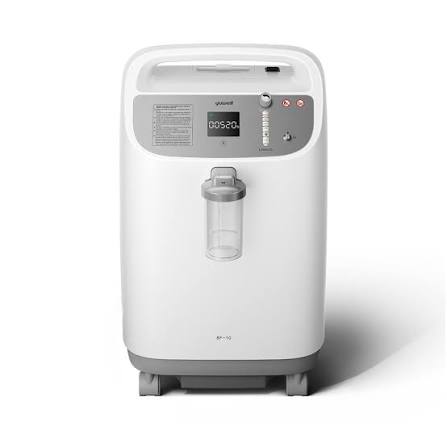
CPAP mask with harness, part of the medical equipment shipmentPortable oxygen concentrator
Ocean · Standard 40' container

Medical bed and oxygen concentrator

What it was

Cargo
Medical bed, oxygen concentrator
Gross weight
2,381 kg
Volume
51 CBM
Origin
Tianjin (CNTSN), China
Destination
San Antonio (CLSAI), Chile

What most compromises a delivery in healthcare

Three things that change the entire planning.

The tender deadline

A good part of the sector’s purchases are awarded with a delivery date and a penalty for delay. That changes the nature of the job: it is not about bringing the cargo as soon as possible but about guaranteeing a date.

What we do differently: we plan backward from the commitment. If delivery is on the 30th, the cargo has to be cleared before that, at the port before that, and shipped with a margin for a customs inspection that may occur.

The margin is not excess caution: it is the only thing that separates a delivery met from a penalty.

The remaining shelf life

It is the point that surprises first-time importers of supplies the most. Many products have an expiration date, and the buyer —especially an institutional one— requires them to arrive with a minimum percentage of shelf life ahead. A lot that was delayed at origin or sat for weeks at the port can be rejected even if it is in perfect condition.

What we check: the manufacturing date of the lot before shipping, not when it arrives. If the margin is narrow, ocean may stop being viable even though it is the cheapest.

Equipment that is down

When clinical equipment fails, what stops is patient care. An urgent spare part in healthcare has the same character as in mining, with an additional component that is not economic.

When we choose each route

The criteria, not the procedure.

Ocean

For bulk supplies and planned equipment. It is where the reasonable cost is and where most of the sector moves.

What decides it: whether the remaining shelf life allows it and whether the committed date has enough margin. A container with reagents close to expiry can be a bad decision even if the freight is a fraction of air.

What is underestimated: time at the port. A container with temperature-sensitive cargo should not sit in the yard, and a supply with an expiry date loses shelf life every day it waits. Clearance prepared before arrival is worth more here than in any other sector.

Air

For reagents, cold-chain products, spare parts for equipment that is down and anything with a tight deadline.

What decides it: the total transit, not the flight time. For refrigerated cargo every stopover is a risk, and a connection with a long wait on the ramp can compromise the temperature range.

What has to be resolved beforehand: portable equipment with lithium batteries is treated as dangerous goods, and some imaging equipment carries components with their own regulation. That is verified on the data sheet before booking, not at the airport.

Road

The final leg, and in healthcare it has a particular difficulty: the destination is usually a hospital facility, not a warehouse.

What complicates it: many hospitals and clinics have no loading dock. They have an access shared with ambulances, restricted hours, elevators with a size limit and reception staff who are not there to receive a truck.

What is coordinated beforehand: the receiving window, the exact unloading point, whether it has to go up by stairs or elevator, and whether the equipment needs to be unpacked on the spot. Imaging equipment that does not fit through the operating room door is a problem solved by measuring beforehand, not by unloading.

How high-value equipment travels

Calibrated or useless, and the damage is rarely visible from the outside.

An ultrasound scanner, imaging equipment or an operating room tower do not travel as general cargo. They are high-precision electronic devices that arrive calibrated or are of no use, and the damage that ruins them is rarely visible from the outside.

The rule that organizes everything: the equipment never travels suspended or resting on other cargo. It sits firmly on the container floor, immobilized by a system that combines three layers.

  1. First, the crateThe equipment does not go into the container bare. It is placed in a rigid custom-made plywood box. The space between the equipment and the walls of the box is filled with high-density polyethylene foam. It is not padding against knocks: it is there to absorb the continuous micro-vibrations of the ship’s engine or of the asphalt, which are what miscalibrate an instrument over weeks.
  2. Then, immobilization inside the containerProfessional lashing has three components and all three are necessary. If one is missing, the system does not work.
    • Blocking. Clinical equipment often comes with wheels for hospital use, and that is precisely what is dangerous on a journey. Wooden chocks and wedges are nailed to the container floor around the base, to rule out any possibility of rolling or sliding.
    • Bracing. Tall equipment with a high center of gravity does not just slide: it tips over. With the rolling of the ship or a truck braking hard, the greatest risk is tipping. Wooden frames are built in diagonal and horizontal arrangements, resting against the container walls and corner posts, forming a containment cage that redirects the energy of the movement.
    • Lashing. High-tenacity polyester straps with ratchet tensioners, hooked to the container’s structural lashing rings. They apply downward pressure, and that friction is what integrates the package with the floor of the unit.
  3. And the handling indicatorsOn the outside of the crate, sensors are installed that reveal what happened in transit. An impact indicator changes color if the cargo received a blow above the defined threshold. A tilt indicator reveals whether the box was turned over or tilted during handling. Their value is not preventive but evidentiary: when equipment arrives faulty, those indicators say whether the damage occurred in transit and on which leg. Without them, the discussion with the insurer is one opinion against another.

Who does what

The crate is built by the supplier. We require it and we verify it.

That distinction matters, because it is where most operations fail. The importer does not know what to ask for, the supplier packs as they are used to, and the problem appears when the container is opened at destination.

What we require from the supplier, in writing and before shipping

  • Custom-made plywood crate, with internal high-density foam cushioning.
  • Documented loading and lashing plan. Not the promise that the cargo will be well secured, but the detail of how it will be immobilized: blocking, bracing and lashing points.
  • ISPM 15 treated wood. All the wood of the crate and of the blocking must be heat treated and carry the stamp. Without that, customs can hold the container at destination, and then the equipment arrived perfect but still cannot be delivered.
  • Photographs of the loading process. Of the equipment in the crate, of the finished lashing and of the container before sealing. They cost nothing and are the only evidence of how the cargo left if a claim has to be made later.

ISPM 15 treated wood is what is most often overlooked, because it looks like packing material and not like cargo. For phytosanitary control, it is cargo.

When the supplier cannot meet it

It happens often, especially with manufacturers that sell a lot in their domestic market and export little. It is no reason to accept insufficient packing or to change suppliers.

Our agent at origin carries out the service under our supervision: they collect the equipment from the plant, build the custom crate, execute the lashing plan and document the process before closing the container.

This only works if it is decided early. A custom crate is made to the equipment’s dimensions, and that takes days. Coordinating it when the cargo is already ready for pickup means delaying the shipment or giving up the standard. That is why the question about packing is among the first we ask, not the last.

Before committing

What we check first.

  • Is there a committed date with a penalty? It changes the entire planning and the margin that has to be left.
  • Does the product require prior registration or authorization? Many clinical devices and products need it, and it is processed per product, not per shipment. If it is the first import of a reference, that procedure defines the calendar. See trade compliance.
  • Have you sorted out the certificate to release it from customs? Every medical device needs a Customs Destination Certificate from the ISP, even those that do not require health registration. That requirement has been in force since 2018 and some importers still do not know about it. And devices subject to conformity verification also need a certificate for each lot imported, not just one. See trade compliance.
  • What shelf life does the buyer require? And with what manufacturing date does the lot ship.
  • Does it require a temperature range? Which one, and whether it must be recorded during transit.
  • Who installs and when? For equipment, the useful delivery date is the one that matches the technician and the room being ready.
  • How is it received at destination? Access, hours, door and elevator dimensions.
  • Does the supplier know how to pack this equipment? Not all do it well, and some have never exported. If they cannot deliver in a custom crate with a lashing plan, it has to be solved before loading: an agent at origin can do it, but that is coordinated weeks ahead, not on the day of pickup.

What the healthcare customer needs

And does not always get.

  • Certainty of date, not optimistic estimates. Whoever has a penalty hanging over them prefers a realistic date to a good-looking one.
  • Notice of a problem as soon as it is detected. A delay communicated in time allows an extension or a partial delivery to be arranged. The same delay announced on the day of delivery is already a penalty.
  • Verifiable care in handling. High value, sensitivity to knocks, temperature conditions: these are things that are easily promised and are checked only when something fails.

Next step

Does your delivery have a committed date?

Send us the details. We tell you which route makes sense and with how much margin, before you commit to your customer.