·info@ducis.cl·Av. Apoquindo 4700, Of. 1102, Las Condes, Santiago, Chile
Freight forwarders·Mon to Fri, 9:00 – 18:00

Expertise · Cosmetics and pharmaceuticals

Cosmetics and pharmaceuticals

In cosmetics and pharmaceuticals, a product can look perfect on the outside and have lost its efficacy on the inside. A cream that separated in the heat, an active ingredient that degraded at a terminal in the sun, a lot that arrived without the label the Chilean regulation requires.

None of that is visible when the container is opened. That is why it is controlled beforehand.

Two industries with a shared requirement

Different sectors, with different regulators and levels of stringency.

Pharmaceuticals are considerably stricter. But they share three things that define how they are transported.

  • The product is authorized before it is imported. It is not enough for the cargo to arrive well: the product has to be cleared for sale in Chile, and that is processed per product, not per shipment.
  • Temperature matters even if it is not refrigerated. It is the point most underestimated, and the one with its own section further down.
  • Many products are dangerous goods without looking like it. Perfumes, hairsprays, nail polishes, aerosols, alcohols, some laboratory solvents.

Raw material or finished product

It is the first question, because it changes the entire procedure.

Finished product

Packed, labeled and ready for sale. It is what reaches the consumer, and that is why it is what the health authority controls most: product registration, labeling in Spanish with the information the regulation requires, and authorization of each import.

Raw material

Active ingredients, excipients, fragrances, bases, packaging. They arrive at a laboratory or plant that turns them into a finished product in Chile. The control is different: it centers on who receives it —normally an authorized establishment— and on lot traceability. But transport is usually more demanding, not less: many raw materials are more sensitive to temperature and humidity than the final product, and some are dangerous goods in their concentrated form even if the finished product is not.

Misclassifying a cargo in this category —declaring as raw material something that is sold as it is, or the other way round— is among the errors that hold up the most shipments in this sector.

What we have moved

Real operations, with their dimensions.

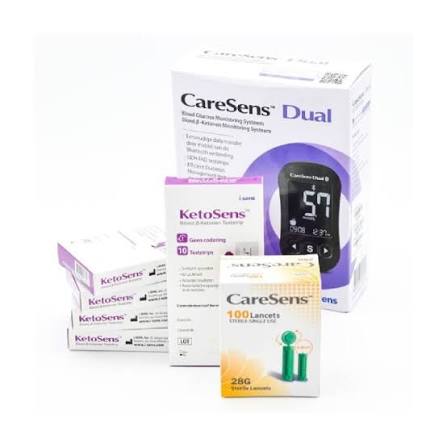
CareSens glucose meters and KetoSens test strips ready for shipment
Ocean · Reefer at ambient temperature

CareSens N Premier Basic Meter

What it was

Cargo
CareSens N Premier Basic Meter
Equipment
2 x 40' reefer
Temperature
18 °C
Ventilation
25% open
Gross weight
8,017 kg
Volume
60.016 CBM
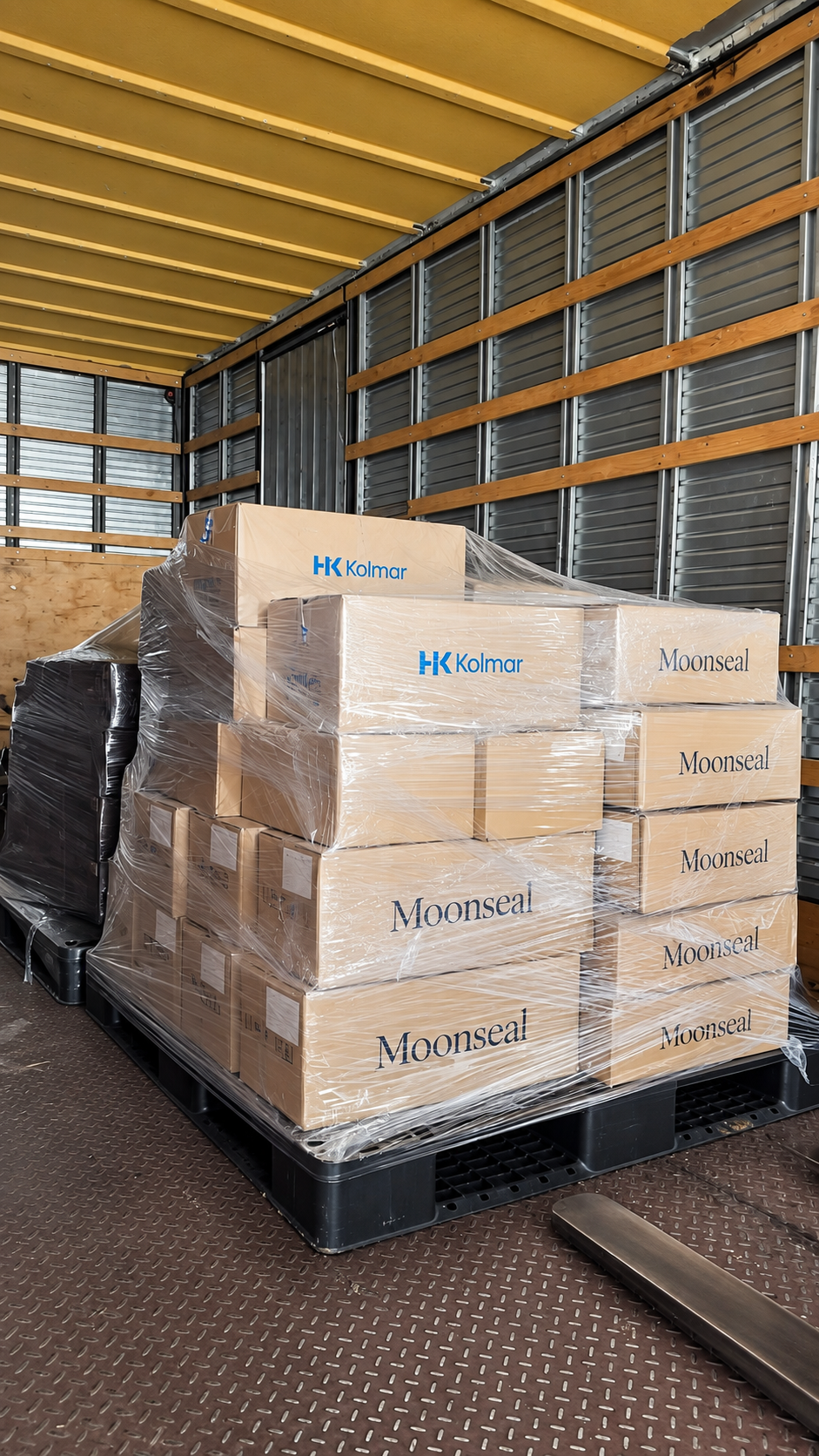
Moonseal cosmetics line: serum, toner and creamPallets of Moonseal and HK Kolmar boxes stowed on a truck
Ocean · LCL

Other make-up products

What it was

Cargo
Other make-up products
Equipment
LCL, 2 pallets
Gross weight
455.3 kg
Volume
2.541 CBM

The risk nobody sees

Ambient temperature.

Many people assume that if a product does not need refrigeration, it does not need temperature care. It is an expensive mistake. A good part of pharmaceutical products and many cosmetics must be kept at controlled ambient temperature: a moderate range, with no extreme heat or freezing. And a dry container does not guarantee that.

What happens inside a dry container

A metal container exposed to the sun works like an oven. At a tropical terminal, or waiting to board in the height of summer, the interior temperature can far exceed that of the outside environment. In that range:

  • Emulsions —creams, lotions, foundations— separate. Water and oil stop being mixed, and the product does not recover when it cools.
  • Active ingredients degrade. A medicine can look identical and have lost part of its potency.
  • Packaging deforms, and those holding gas or alcohol build up internal pressure.
  • Fragrances change. The perfume that arrives is not the one that left.

And the other way round: in winter or on mountain routes, freezing breaks emulsions and crystallizes solutions in the same irreversible way.

How it is controlled

  • Knowing the product’s range. The manufacturer states it on the data sheet or the certificate of analysis. If the range is narrow, an ordinary dry container will not do.
  • Refrigerated container set to ambient temperature. Not to cool, but to hold a stable range. It is the usual solution for pharmaceuticals and sensitive cosmetics, and costs less than losing a lot.
  • Thermal blankets or insulating liners for less sensitive cargo, when refrigeration is not justified.
  • Under-deck stowage on the vessel, away from direct sun and heat sources.
  • Minimum time at the terminal. The greatest risk is not in the sailing but in the days the container waits in the sun, at origin or at destination.
  • Temperature record. For pharmaceuticals it is practically mandatory: it is the only way to demonstrate that the lot stayed within range.

What most compromises an operation in this sector

Authorization: two procedures, not one.

It is the first thing worth understanding, because confusing them is the origin of most delays.

Product authorization. It is obtained from the ISP once per product. For cosmetics there are two routes depending on the category: health registration, or notification for hygiene, low-risk and air-freshener products. For medicines, registration, and considerably more demanding.

Control of each import. Cosmetics and their raw materials are subject to ISP import control, which means the cargo is not freely released from customs. A Customs Destination Certificate is processed, issued by the ISP, to move it to a warehouse with a valid health authorization.

That certificate authorizes the move, not the sale. Depending on the product, the authorization for use and disposal is then needed before it can be marketed. Confusing the two steps is among the errors that delay going on sale the most. See trade compliance.

Whoever brings in a line of twenty references needs twenty product authorizations. That defines the calendar of the whole project, not of the shipment.

What is worth settling before buying

Most of the problems of a cosmetics import do not happen at customs. They happen earlier, in decisions already made.

  • The formula. The ISP compares the ingredients against its lists of authorized, restricted and prohibited ingredients, and in their absence uses those of the European Union and the FDA as a reference. An ingredient with a concentration limit detected late forces a reformulation, and that is not done by the importer: it is done by the manufacturer, on their own timeline.
  • The claims. A cosmetic cannot claim therapeutic action. Marketing copy translated from the country of origin —“regenerates,” “cures,” “treats”— can take the product out of the cosmetic category and turn it into something else, with a different procedure.
  • The nomenclature. Ingredients are identified by the ISP’s Cosmetic Ingredients Registry or by INCI nomenclature, not by the trade names the supplier uses.
  • Children’s cosmetics. Those intended for children under six have requirements of their own depending on the cosmetic form, such as pH and microbial limits, and they cannot be allergenic or irritating.
  • The establishment. The notification route relies on the importer holding a health authorization, and registration also requires a person in charge of technical direction.
  • The warehouse. It must have its health authorization valid at the time the Customs Destination Certificate is requested, not when the container arrives. An authorization expired by a few days stops the cargo all the same.

The mistakes that cost the most

  • Shipping before the product’s authorization is sorted out. The cargo arrives, cannot leave, and accrues storage while something that takes weeks is processed.
  • Printing the final labeling before the regulatory review. If it has to be corrected, the whole lot is reprinted.
  • Assuming that the free-sale certificate from the country of origin replaces the Chilean procedure. It serves as support, not as authorization.
  • Assuming that a single procedure covers an entire line. Each variant may be a different product for the authority.
  • Treating the Customs Destination Certificate as a sales authorization. The goods stay in the warehouse, but they still cannot be sold.
  • Discovering at customs that the product was not a cosmetic but a medical device or a medicine. It happens more often than people think, almost always because of a claim.

Labeling

In Spanish, before printing, not when the cargo has already arrived.

The finished product must arrive with the labeling the Chilean regulation requires: in Spanish, with the mandatory health information and the importer’s and manufacturer’s details.

There are two ways to solve it. Label at origin, which requires coordinating with the supplier before producing the lot. Or label in Chile after the import, at a facility authorized to do so.

In both cases, the label artwork is checked against the regulation before printing, not when the cargo has already arrived. And the decision is made before shipping: a lot that arrives without labeling and without having planned where to label it is held.

Other risks specific to the sector

What is hidden and what is lost.

Hidden dangerous goods

In cosmetics especially, an important proportion of the catalog is dangerous goods: everything that contains alcohol in relevant concentration, aerosols, nail polishes, some removers.

The problem appears when the product travels mixed with cargo that is not, undeclared. By air it is not accepted; by sea it may require segregation. See dangerous goods.

Counterfeiting and theft

High-value products, easy to resell and hard to trace once outside the chain. The sector has a real risk of pilferage in transit and in warehouses, and of product substitution.

The response is lot-level traceability, seals verified at every handover and minimizing the handling points.

When we choose each route

The criteria, not the procedure.

Ocean

For volume, scheduled replenishment and raw materials in quantity. It is where most of the sector moves.

What decides it: whether the product’s temperature range admits a dry container or requires a refrigerated one set to ambient temperature. And whether the route crosses zones of extreme heat or spends days at tropical terminals.

What is underestimated: the wait at the terminal. A well-equipped container that spends a week in the sun at the port of origin can cancel all the care taken during the rest of the trip.

Air

For dated launches, samples, urgent replenishment and products with a high value per kilo.

What decides it: that the cargo is not undeclared dangerous goods, which is where most cosmetic shipments are rejected by air. And the time the cargo waits on the apron, which at airports in warm climates can be more critical than the flight itself.

What is advisable: for sensitive pharmaceuticals, services with temperature control throughout the journey, including the wait on the ground.

Road

For the regional corridor and national distribution.

What decides it: that the truck holds the range throughout the journey, including the border crossing, where the wait can be prolonged. And on mountain routes, the risk of freezing in winter, which affects this sector as much as heat does.

Before committing

What we check first.

  • Is it raw material or finished product? It changes the procedure and sometimes the sensitivity of the cargo.
  • Does the product have a valid authorization in Chile? Registration or notification, as applicable. If it is the first import of a reference, that authorization defines the calendar.
  • Does the destination warehouse have a valid health authorization? Without it there is no Customs Destination Certificate.
  • What temperature range does it require? If you do not know, the manufacturer’s data sheet or certificate of analysis says.
  • Are any of the products dangerous goods? Alcohols, aerosols, nail polishes. They are identified before consolidating.
  • Where is it labeled? At origin or in Chile, and by whom.
  • What temperature record does the customer need? For pharmaceuticals, almost always one that can be presented to the authority.

Next step

Are you evaluating bringing a brand to Chile?

The cheapest thing is to sort out the classification and the formula before closing the purchase. Send us the data sheet of each product and we tell you what it requires, under what conditions it must travel and what needs to be resolved before the first shipment.