·info@ducis.cl·Av. Apoquindo 4700, Of. 1102, Las Condes, Santiago, Chile
Freight forwarders·Mon to Fri, 9:00 – 18:00

Expertise · Perishables

Perishables

A perishable is not just what needs cold. It is any product whose quality is lost with time and the conditions of the journey: the salmon that goes out of range, but also the coffee that gets damp or the spices that absorb the smell of another cargo.

Each family has its own enemy. In the cold chain it is temperature; in dry perishables, humidity. And in both cases the damage rarely happens during the voyage: it happens in the handovers and in the preparation.

Two families, four types of cargo

Calling everything that spoils “perishable” hides differences that change the shipment.

The first separation is between what needs cold and what needs to stay dry.

Cold-chain perishables

Fresh

Fruit, vegetables, flowers. They are still alive after harvest: they breathe, consume oxygen and release heat and gases. The container cannot be hermetically sealed: it needs controlled ventilation to renew the air, and for some products, modified atmosphere. Nor can all fresh produce travel together: some fruits emit gases that accelerate the ripening of others, and consolidating incompatible products can ruin the shipment even if the temperature is perfect.

Chilled

Products kept above freezing point: fresh meat and fish, dairy, some processed foods. They are the most delicate to handle, because their temperature margin is usually narrow. A few degrees above accelerate spoilage; a few degrees below partially freeze and damage the texture.

Frozen

Seafood, meat, prepared foods, pulps. They travel below freezing point and do not need ventilation. They are the most tolerant of transit time, but the least tolerant of an interruption: a frozen product that partially thaws and freezes again loses quality irreversibly, and that is detected in the product even if the logger shows the correct range at the end.

Dry perishables

Coffee, spices, cocoa, nuts, pulses, tea. They do not need refrigeration and are stable for months if stored well. But they spoil all the same, and for a different cause.

Dry perishables

Their enemy is humidity.

They are hygroscopic: they absorb water from the environment. A green coffee bean that gains moisture during the voyage develops mold, ferments or loses the qualities that defined its price. And the damage is not always visible when the container is opened; sometimes it appears weeks later in the warehouse.

Container rain

It is the main risk and the least known outside the sector.

When a container loaded at a warm, humid origin sails toward colder waters, the air inside cools against the metal walls and roof. The moisture that air carried condenses and drips onto the cargo. During a long voyage this can happen every night.

The typical result is a band of damaged bags right under the roof, while the rest of the lot is perfect. It is the unmistakable sign of condensation. Routes from tropical zones to Chile cross precisely that change of climate, which is why the risk is real for a good part of the origins of coffee and spices.

The second enemy: odors

These products absorb odors easily. A container that carried chemicals on its previous trip, a wooden pallet treated with a strong product or a warehouse shared with another cargo can contaminate the lot.

For products sold on their aroma, such as coffee or spices, that amounts to losing the commercial value even if the product is harmless.

How it is controlled

  • Dry container inspected before loading. No odors, no leaks, no rust on the roof or remains of the previous shipment. A container that fails that check is rejected.
  • Inner liner. A sleeve that isolates the cargo from the metal walls, where condensation forms.
  • Kraft paper or absorbent blanket under the roof. It catches the dripping before it reaches the bags.
  • Desiccants. They absorb moisture from the inner air during the voyage and reduce condensation.
  • Dry cargo at ambient temperature. A product loaded with high moisture of its own releases it into the container. A product loaded cold in a warm environment generates condensation on itself.
  • Separation from the floor and the walls, when the type of packaging allows it, so that it does not absorb moisture by contact.

Coffee, in particular

Green coffee is a living seed, stable for months if kept dry and away from odors. It is the dry perishable most exposed to container rain.

Roasted coffee spoils considerably faster: its oils oxidize and it loses aroma within weeks or a few months. It travels in valve-sealed packs, which let gases out without letting air in. For roasted coffee, transit time weighs more than for green.

Both also require health authorization to enter Chile, and green coffee in particular, a phytosanitary certificate issued at origin. See trade compliance.

What we have moved

Real operations, with their dimensions.

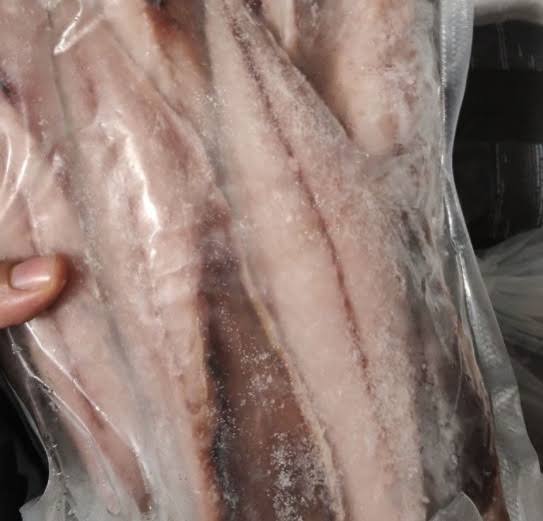
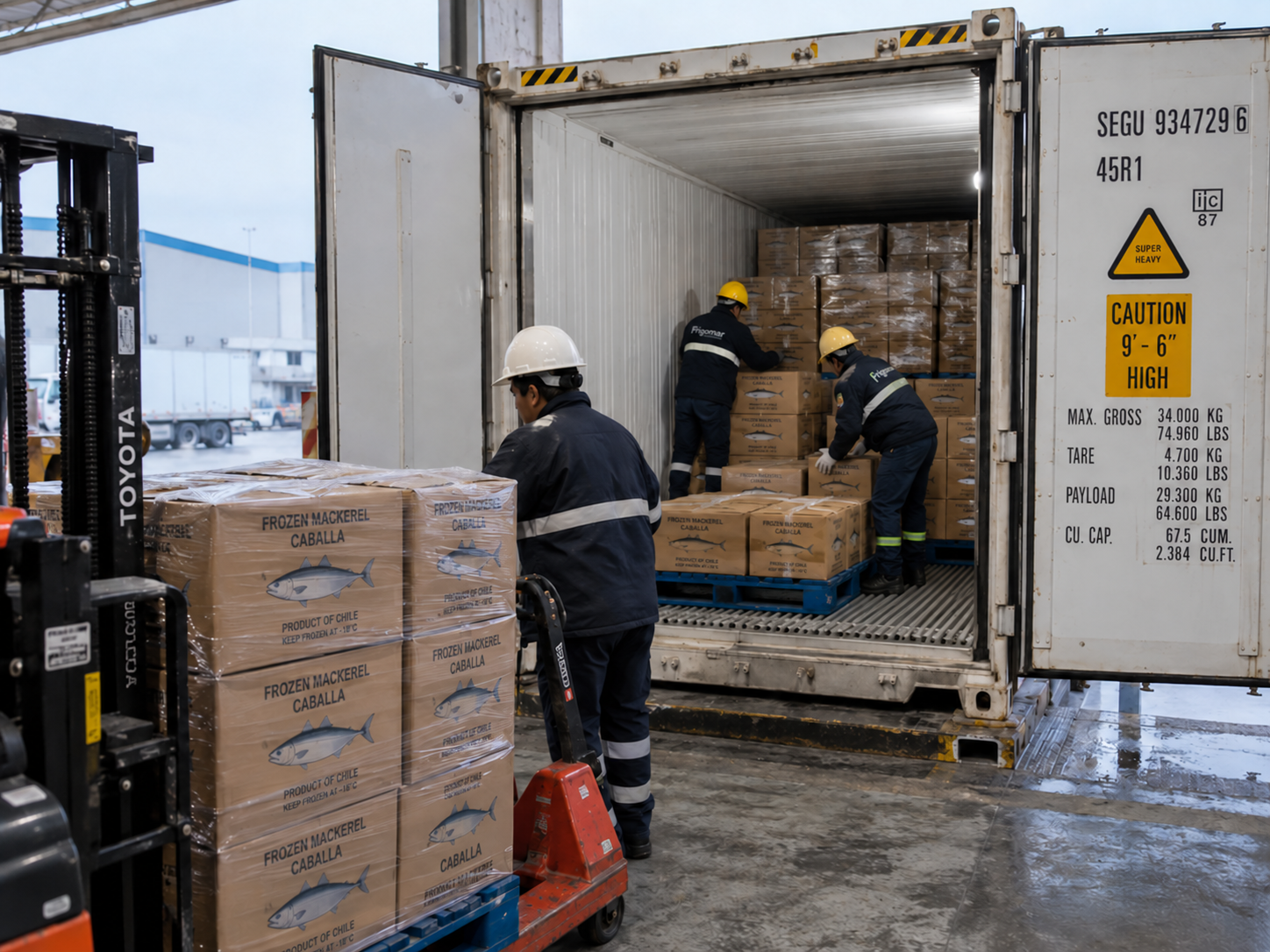
Frozen fish fillets (mackerel), vacuum-packedLoading of boxes of frozen mackerel into a refrigerated container
Ocean · Frozen -22 °C

Frozen fish, export

What it was

Cargo
Frozen fish (mackerel)
Equipment
3 x 40' RF HC
Temperature
-22 °C
Gross weight
85,303.5 kg
Volume
180 CBM
Origin
Lirquén (CLLQN), Chile
Destination
Guayaquil (ECGYE), Ecuador
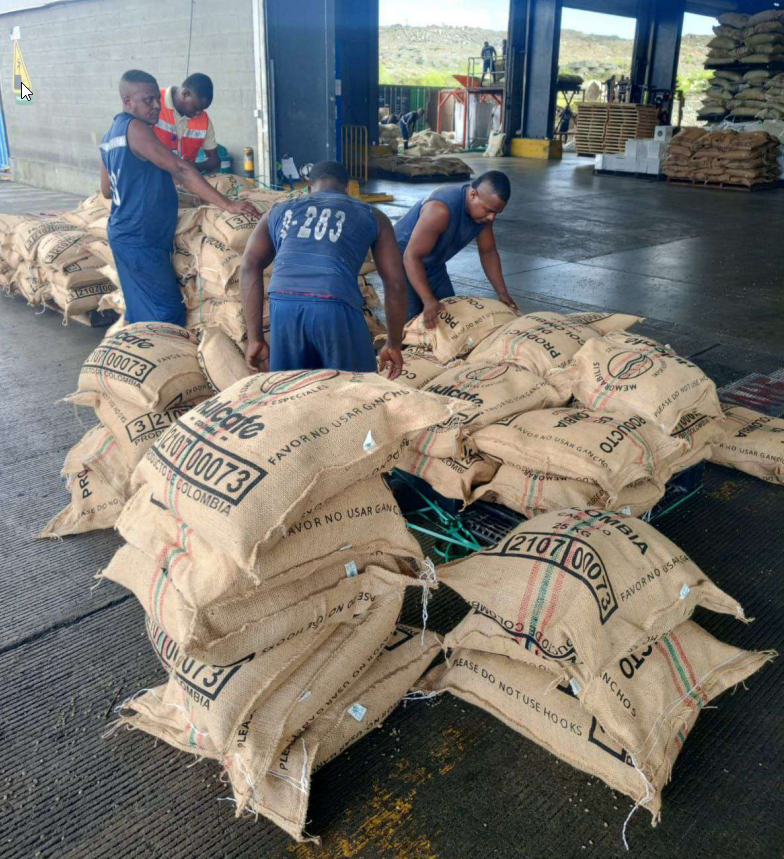
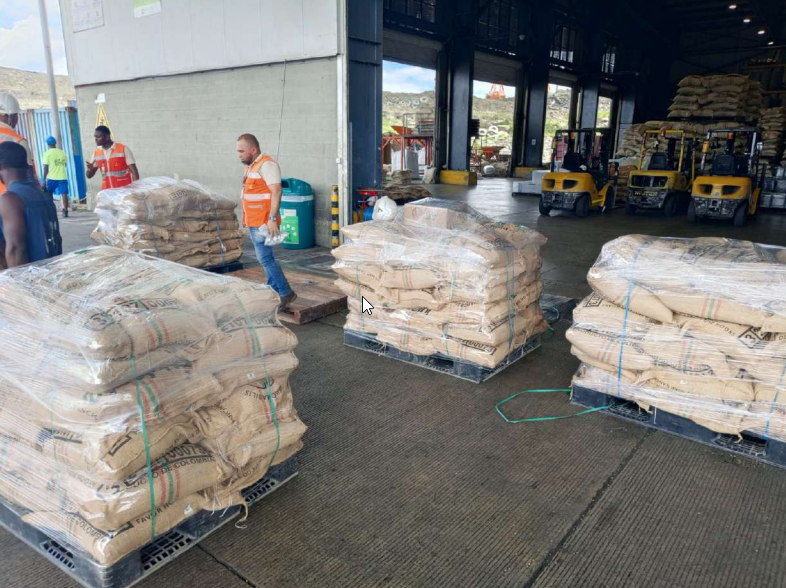
Bags of green coffee being stowed in the warehouse of origin, ColombiaPallets of green coffee wrapped and ready for shipment
Ocean · LCL

Green coffee, export from Colombia

What it was

Cargo
Green coffee
Equipment
LCL, 4 pallets
Volume
7.5 CBM
Gross weight
3,693 kg
Origin
Buenaventura (COBUN), Colombia
Destination
Valparaíso (CLVAP), Chile

Cold chain

The most common mistake is believing the container cools.

A refrigerated container maintains temperature. It does not lower it. Its unit is designed to hold the cargo within the set-point range, not to remove the heat the cargo brings in. If the goods enter the container at ambient temperature, the unit will take a very long time to bring them into range, and during that time the product is deteriorating.

That is why the cargo has to arrive pre-cooled at the loading point: already at its destination temperature before going into the container. The container must also be pre-cooled before loading. It is the supplier’s responsibility at origin, and it is the first one we verify. A lot loaded warm has the damage done before sailing, and no temperature logger will show it as a transit problem.

Where the chain breaks

Not on the ship or the aircraft. There the units work and are monitored. The chain breaks at the moments when the cargo changes hands or waits.

  • At loading at origin. When the container is opened at an unrefrigerated dock and the cargo waits in the sun while it is stowed.
  • At the terminal. A refrigerated container needs to be connected to power while it waits for boarding or pickup. If the terminal has few sockets available or there is a delay in connecting, the unit stops working.
  • At inspection. When customs or the health authority orders a physical inspection, the container is opened. A poorly coordinated inspection can leave the cargo exposed longer than necessary.
  • At the last mile. The refrigerated truck that did not arrive on time, the delivery that waited at a dock, the destination warehouse that had no cold-room space.

Each of these points is foreseeable. What is planned well beforehand rarely fails; what is improvised, fails.

When we choose each route

The criteria, not the procedure.

Ocean

For volume, frozen goods and fresh produce with longer shelf life. It is the route of perishable trade at scale.

What decides it is whether the product’s shelf life withstands the complete transit, including the days at both terminals. A frozen product withstands weeks without problem; much fresh produce does not.

The equipment is the refrigerated container, which is programmed with four parameters: set-point temperature, ventilation, humidity and, where applicable, controlled atmosphere. The last three depend on the product, not on the operator’s preference. Poorly programmed ventilation suffocates fresh produce; the same ventilation on frozen goods lets heat in.

What is underestimated: power sockets at terminals and waiting days. A refrigerated container discharged on a Friday and not collected until Monday keeps consuming power and generating charges.

For dry perishables, ocean is almost the only route, in a dry container. Here what decides is not the equipment but the preparation: container inspection, liner, roof protection and desiccants. A well-prepared dry container protects coffee better than any more expensive alternative badly executed.
Air

For short-life fresh produce, high-value products and anything that does not withstand weeks of sailing.

What decides it: the total transit, not the flight time. A connection with a long wait on an unrefrigerated apron can compromise the product more than the entire journey.

The packaging carries the weight of the chain. By air there is often no active refrigeration throughout the journey, so thermal packaging and coolants are what hold the temperature. They are designed for a specific duration, and if the transit runs longer than planned, they run out.

What has to be resolved beforehand: dry ice is classified as dangerous goods in air transport and has limits per package. See dangerous goods.

Road

For the regional corridor and national distribution.

What decides it: that the refrigerated truck arrives pre-cooled and that its unit works throughout the journey. A unit that fails in the middle of a mountain pass has no repair nearby.

What the border crossing adds: the wait. A refrigerated truck held at customs keeps burning fuel to maintain the temperature, and every hour of delay is a risk to the cargo.

The permits that go with the cargo

Time is what matters, not just the procedure.

Most perishables require health authorization in addition to the customs procedure. Depending on the product, SAG, Sernapesca or SEREMI de Salud are involved, and many certificates must be issued at origin.

Food, moreover, does not leave customs freely. It needs a Customs Destination Certificate from SEREMI to move to an authorized warehouse, and then the authorization for use and disposal before it can be sold. On a product with a short shelf life, each of those steps consumes days the product does not have.See trade compliance.

What matters here is time: a refrigerated container held for lack of a certificate not only accrues storage, it consumes the product’s shelf life. A permit that is a nuisance on dry cargo can mean losing the lot on perishables. That is why certificates are checked before shipping, not on arrival.

Before committing

What we check first.

  • What temperature does the product require, and what tolerance does it have? Not a generic range, but that of the specific product.
  • Does it arrive pre-cooled at the loading point? It is the first check, and the one that prevents the most problems.
  • Does it need ventilation or controlled atmosphere? For fresh produce, almost always. For frozen goods, never.
  • Does it travel with other products? If consolidated, confirm they are compatible in temperature and in gas emission.
  • How much shelf life does it have left when it leaves? And how much will the complete transit consume, not just the sailing.
  • What happens at destination? Who receives it, at what time and whether they have a cold room available. A refrigerated cargo that arrives with nowhere to store it is a problem of hours, not days.
  • For dry perishables: what moisture does the cargo leave with? A lot shipped with high moisture releases it during the voyage. It is worth knowing the figure before loading.
  • Does it cross a marked change of climate? If the route goes from the tropics to cold waters, protection against condensation stops being optional.
  • What did the container carry before? For products sold by their aroma, it is as important a question as temperature is for frozen goods.

The record during transit

What proves where it went wrong, not that everything went well.

Every refrigerated shipment must travel with a temperature record. For high-value dry perishables, a humidity logger serves the same purpose.

Its value is not in showing that everything went well, but in showing where it went wrong when something fails. Without a record, a claim for damaged product is a discussion between the exporter, the carrier and the importer in which nobody can prove anything. With a record, you can see at what hour and on which leg it went out of range.

Next step

Do you have a perishable to move?

Send us what it is, under what conditions it must travel and how much shelf life it has. We tell you which route withstands the transit and where attention is needed.